Study Says World Driver To Go "Total Electric" By 2030

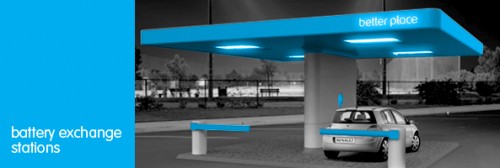
Battery exchange station better place

Although the year 2030 is only some 20 years away, many drivers in developed countries may be driving electric powered cars by then. This prediction was brought out by a study by the Center for Entrepreneurship and Technology at the University of California at Berkley in which electric cars with “switchable batteries” like that of Shai Agassi from Better Place may comprise as much as 86% of all light vehicles being driven – especially in countries like the USA and Japan.

As more and more battery exchange stations are built, such as the ones being presently developed and tested by Israel’s Better Place Electric Car Company , vehicle caused exhaust emissions could be reduced by more than 60%, and result in a savings in imported fossil fuel to America alone by as much as 3.7 million barrels of oil a day.

Even though the cost of building an infrastructure of battery exchange stations would have a high initial cost (estimated at around $320 billion, the eventual savings on health related costs could be as much as $205 billion, as less work time would be lost from respiratory diseases, and treatment by various health services.

Not only that, the cost of these “total electric” vehicles with exchangeable batteries are expected be lower than full gasoline or hybrid models; and will be about $7,500 less when these models begin coming on the market in 2012.

The study goes on to estimate that the cost of running these vehicles, even with the exchangeable battery system, will average 12-13 cents per mile lower than gasoline powered vehicles (depending on the price of oil, and its availability).

Countries like Japan (who must import nearly 100% of its petroleum) and the USA, which is getting support from the present Administration for developing electric vehicles, are now involved in promoting the future of electric cars. For example, Nissan North America will receive $1.6 billion in federal funds to retool its Smyrna, Tennessee, factory to build advanced electric automobiles and an advanced battery manufacturing facility; and the Japanese government is now testing battery exchange stations installed by Better Place and other similar companies.

Undoubtedly, the course of technology will rapidly accelerate in the next 20 years, and other types of energy sources will be developed, along with battery powered electricity, for moving cars down the road – or through the air, if we consider the Back to the Future movie series starring Michael J Fox. 

Some of these include hydrogen fuel, solar energy cells to provide the power instead of exchangeable batteries, etc, and even water- if theories concerning the separation of hydrogen and oxygen molecules from H2O are really true.

Natural and LP gas, as mentioned in a previous Green Prophet article, is also being considered. But even though it is slightly cleaner than petroleum (about 20%) it is still a fossil fuel, and must still be either imported  or made from oil.

No doubt, electric powered cars will eventually play a major role in how people will drive, or fly, from one place to another.


Maurice Picow
Maurice Picowhttps://www.greenprophet.com/
Maurice Picow grew up in Oklahoma City, U.S.A., where he received a B.S. Degree in Business Administration. Following graduation, Maurice embarked on a career as a real estate broker before making the decision to move to Israel. After arriving in Israel, he came involved in the insurance agency business and later in the moving and international relocation fields. Maurice became interested in writing news and commentary articles in the late 1990’s, and now writes feature articles for the The Jerusalem Post as well as being a regular contributor to Green Prophet. He has also written a non-fiction study on Islam, a two volume adventure novel, and is completing a romance novel about a forbidden love affair. Writing topics of particular interest for Green Prophet are those dealing with global warming and climate change, as well as clean technology - particularly electric cars.

Read More

11 COMMENTS

TRENDING

Wave wind energy for Nvidia’s next AI energy boom?

As AI factories consume unprecedented amounts of electricity, NVIDIA is looking beyond chips and data centers to the ocean. The company recently spotlighted Israel's Eco Wave Power and its wave energy projects in Jaffa and Los Angeles, highlighting how AI, digital twins and renewable energy can work together to meet future power demands. The collaboration reflects a growing realization that the future of artificial intelligence may depend as much on clean energy infrastructure as it does on computing power.

The UAE and sovereign wealth funds for green tech 2025 – get the report

The UAE is positioning itself as the Middle East’s green finance hub — mobilizing billions in sustainable bonds, ESG funds, and innovation capital to support its Net Zero 2050 vision. Green Prophet’s UAE Green Finance 2025 Report explores how banks, investors, and policymakers are shaping the next cleantech frontier, from Masdar City to Abu Dhabi’s sovereign initiatives.

Make your bike ugly and theft-proof

Make your bike so ugly so that it's never stolen again.

Is Lucid lucid about sustainability and its dealings with Saudi oil money?

The bigger question is whether the Saudi Fund is serious about creating a thriving EV industry or simply using investments like Lucid for geopolitical leverage and reputation-building. With its deep ties to the fossil fuel industry, Saudi Arabia’s commitment to sustainability remains an open question. And if Lucid fails, it will be a lesson in how throwing money at a problem doesn’t always lead to real change.

Selling your Tesla for a conventional car? Think of the silent pollutant

By choosing an electric car, you’re not just supporting a brand or a CEO. You’re making a statement about the future you want to create. A future with cleaner air, healthier communities, and less pollution. You’re helping reduce harmful brake dust, which poses a hidden health risk to millions of people. And you’re reducing the demand for fossil fuels, contributing to a broader movement toward renewable energy and environmental sustainability.

Yerukim Forms a New Green Economy Where the Money is Really Green

The Yerukim members who pick up the recyclables get to keep the monetary reward, the public earns "green" bills that can be used in shops, and business owners get to be associated with environmentalism.

Choosing Riyadh over Dubai? What Investors Should Know

Saudi Arabia is deploying capital at unmatched scale to catalyze tourism and advanced industry while rewiring its power-and-water backbone. The investable frontier is widening—especially in renewables, grid storage, water efficiency/desal retrofits, and hospitality operating platforms. Prudent investors will insist on phased delivery, enforceable KPIs (energy, water, biodiversity), and RHQ/zone compliance—while pricing political-economy and reputational risks alongside growth upside.

Sell your cooking oil for biodiesel money

Want to make money on old french fry oil? Sell it.

Qatar Alternative Energy Summit Pairs Investors And Innovators

Alternative energy investors and innovators can meet n' greet in Doha, Qatar March 16 and 17.

Here’s How To Implement The Four Pillars Of Employee Engagement

If you throw a party for your work team and they are vegans, don't make it a barbecue. Know the sustainability values of your team to boost moral and retain good people.

Locals From Rishon Fight IKEA

Big Box stores are a pretty new concept in Israel, and thank God that not every Israeli city wants them in their backyard. A word from someone who has see the beautiful farmland around her hometown Newmarket, Ontario stripped and converted into vulgar strip malls of big box shops: they have no place in a healthy and sustainable town or city.

The Jewish National Fund Meets An Inconvenient Truth

According to the JNF, it has transformed thousands of acres of barren land into green forests in Israel. They state that each person emits about 23 tons of carbon per year, estimating that each tree planted can absorb one ton of carbon in its lifetime. That's a whole lot of trees you'd need to be planting. Could so many fit in Israel?

How to quiet noise from construction in your office

Streets need to be resurfaced in New York but the humming and grinding noise is unsettling. Noise is environmental pollution. 

Popular Categories