

Antibiotics From An Underwater Drugstore

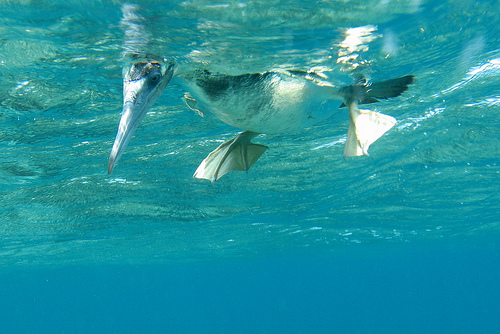
duck underwater photo

No matter how sophisticated modern medicine becomes, common ailments like fungal infections can outrun the best of the world’s antibiotics. In people with compromised immune systems (like premature babies, AIDS victims or those undergoing chemotherapy for cancer) the risk is very high: contracting a fungal infection can be deadly.

Now Tel Aviv University zoologists are diving deep into the sea to collect unique chemicals — drugs of the future — to beat unnecessary death by fungal infection. And their secret weapon is the common marine sponge.

Prof. Micha Ilan from the Department of Zoology at TAU, who is heading the project, has already identified several alternative antibiotic candidates among the unique compounds that help a sponge fend off predators and infections. He and his graduate students are now identifying, isolating and purifying those that could be the super-antibiotics of the future.

The research group at TAU has found and isolated thousands bacteria and fungi, including a few hundred unique actinobacteria. So far, several tens hold promise as new drugs.

From the Sea to the Lab
Photo: Prof. Micha Ilan, Tel Aviv University“Resistance to antibiotics has become an unbelievably difficult challenge for the medical community,” says Prof. Ilan. “Sponges are known for hosting an arsenal of compounds that could work to fight infections. We’re now culturing huge amounts of microorganisms, such as actinobacteria, that live in symbiosis with marine sponges.”

Marine sponges were recently made famous by the popular Nickelodeon TV cartoon SpongeBob SquarePants, which features a sea sponge who lives in a pineapple beneath the ocean.

In real life, sea sponges are animals whose bodies consist of an outer thin layer of cells and an inner mass of cells and skeletal elements. The sedentary creatures don’t really have the sort of adventurous life that the cartoon depicts.

Marine sponges can’t move. Glued to the seafloor, they must rely on the flow of water through their bodies to collect food and to remove waste. This has led to a unique adaptive response to enemies and competition. Sponges don’t have teeth, or shells, but protect themselves by building associations and partnerships with bacteria and fungi. Tel Aviv University is tapping into these relationships — looking at the same chemicals that the sponge uses for defense to fight infection in humans.

Research Combines Several Fields of Study
Drug developers have known for decades about the potential goldmine of pharmaceuticals in the marine environment, particularly among sedentary life like marine sponges.

“One of the major problems is that these novel and natural compounds are found in very small quantities,” Prof. Ilan explains. Collecting and extracting such large amounts of these unique chemicals would require huge quantities of animals to be sacrificed, a practice which is not in line with zoological conservationist values.

So Prof. Ilan takes cultures from sea sponges with minimal damage to the natural environment. He then grows their symbionts and tests them in a “wet” laboratory. The methods Prof. Ilan has perfected can now be used by other scientists developing pharmaceuticals from marine sponges.

“Our research is unique in that we take both an agricultural and microbiological approach — not found often in the drug discovery community,” says Prof. Ilan.


Read More

1 COMMENT

TRENDING

Dan Zaslavsky’s energy tower dream is rising again in Iran and China

The Energy Tower idea never made the leap from drawings and engineering studies to full-scale construction. But nearly two decades after most people stopped talking about it, the concept is quietly evolving in two unexpected places: China and Iran. The concept let dreamers dream and doers do - figuring out more pleasing designs and engineering.

A visit to Amirim, Israel’s first all-vegetarian village in the Galilee

Just 15 kilometers from Tzfat there is a moshav that was founded in the late 50s that was ideologically influenced by organic, vegetarian and vegan principles. My hostess at Ohn-Bar, the tzimmer where I stayed, explained that the people of Amirim were among the pioneers of Israel’s strong vegetarian movement.

Israeli Hydrogen Startup H2Pro Are Trying to Solve Clean Energy’s Hardest Problem

The company has attracted backing from major investors including Breakthrough Energy Ventures, the climate fund founded by Bill Gates, along with industrial partners such as Sumitomo, ArcelorMittal, and Temasek, a multi-billion dollar company that owns Singapore airlines. H2Pro has raised more than $100 million USD and is moving from pilot projects toward commercial-scale deployments.

Elkhorn corals planted to restore reef diversity

The project centers on “Flonduran” corals, which are offspring of Florida elkhorn corals bred with elkhorn corals from Honduras. These new corals are being evaluated alongside Florida elkhorn corals of the same age that are outplanted side by side in natural reef habitats to assess whether the new genetic diversity can enhance coral resilience and reduce coral bleaching during Florida’s warm summers.

Econcrete makes built coastlines richer in marine life with new investment

    A decade ago, we met Shimrit Perkol-Finkel in a...

Locals From Rishon Fight IKEA

Big Box stores are a pretty new concept in Israel, and thank God that not every Israeli city wants them in their backyard. A word from someone who has see the beautiful farmland around her hometown Newmarket, Ontario stripped and converted into vulgar strip malls of big box shops: they have no place in a healthy and sustainable town or city.

The Jewish National Fund Meets An Inconvenient Truth

According to the JNF, it has transformed thousands of acres of barren land into green forests in Israel. They state that each person emits about 23 tons of carbon per year, estimating that each tree planted can absorb one ton of carbon in its lifetime. That's a whole lot of trees you'd need to be planting. Could so many fit in Israel?

How to quiet noise from construction in your office

Streets need to be resurfaced in New York but the humming and grinding noise is unsettling. Noise is environmental pollution. 

EarthX and a blueprint for sustainable investing

Trammell S. Crow, a Dallas-based businessman and father of four, is focusing his efforts on impact investing, and media that focuses on saving the planet through EarthX.

Mining Afghanistan’s Mineral Discoveries Similar to Avatar

Now that American forces in Afghanistan are commemorating the longest period of any war that America has been involved in, including the 1965-73 Vietnam War, the recent discoveries of large and extremely valuable mineral and metal deposits may finally bring to light a reason to continue the presence of US fighting forces in this war torn and backward country.

From Pilot Plant to Global Stage: How Aduro Clean Technologies’ 2026 Expansion Signals a Turning Point for Chemical Recycling Investors Like Yazan Al Homsi

The company's Next Generation Process (NGP) Pilot Plant in London, Ontario, has officially moved into initial operating campaigns, generating the kind of structured, repeatable data that separates laboratory promise from commercial viability.

Nobul’s Regan McGee on Shareholder Value: “Complacency Is the Silent Killer” 

Why the governance framework designed to protect shareholders so...

Should You Invest in the Private Market?

startustartup Unlike public stock exchanges, which offer daily trading, strict...

Popular Categories