Turkey Creates and Tests Hybrid Buses As Part of Project Ğ

bus-turkey

If you’ve ever had the pleasure of living in or visiting Turkey, you’ll find it’s very hard to get lost off the beaten trail. The public transportation system there is so well oiled; bus owners of private buses or the smaller minibuses –– the dolmus –– are so well organized, you can literally scoot across the country by just telling one of the bus assistants (who approach you), where you’d like to go.

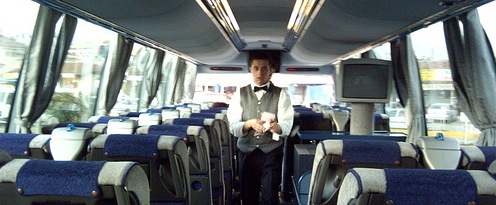
A few years back when I was there, I noticed the service was great too: buses are on time; the assistant –– who operates like a steward –– splashes cologne in your hands as a refresher, and then serves you tea, coffee and cookies. A delight.

The world has a lot to learn from the Turkish public transportation system which may just be getting a whole lot better: According to the Ankara newspaper Hurriyet, the Turks have developed their own hybrid buses at the Scientific and Technological Research Council of Turkey (TÜBİTAK), and feasibility studies are underway to test how the buses will work in the urban environment.

A country-wide initiative to reduce greenhouse gases in the transportation sector –– called Project Ğ –– aims to increase the use of hybrid vehicles in large urban areas. The new hybrid bus initiative is part of it.

“The cars with internal combustion engines have many disadvantages in traffic jams. The electric and hybrid cars don’t use energy while waiting in traffic thanks to the engine and batteries, the batteries charge when the brake is applied and while it is going downhill. These actions make the vehicles more efficient,” said Hamdi Uçarol, a researcher from TÜBİTAK developing the project.

Researchers continue their studies, meanwhile prototypes of their new buses are now at the commercialization stage.

In noisy Turkish cities, the quieter hybrids, will also reduce noise pollution.

And if the Turks play their cards right, they may be able to compete with the hybrid development in countries such as Japan and United States, they hope. “If studies and research continue in Turkey, we will catch up with those countries. The project will be fulfilled until the end of this year and the buses will be presented to the industry,” said Uçarol.

One question on this Green Prophet’s mind: since hybrid buses are already being used effectively in places like New York City, then why re-invent the wheel?

::Hurriyet

Image credit: Tupinamba

More on hybrid transport:
Hybrid Cab Fleet Taking Over Tel Aviv
A Mercedes Luxury Hybrid to Hit the Middle East
My Parents And The Pleasure of Owning A Prius

Karin Kloosterman
Karin Kloostermanhttp://www.greenprophet.com
Karin Kloosterman is an award-winning journalist, innovation strategist, and founder of Green Prophet, one of the Middle East’s pioneering sustainability platforms. She has ranked in the Top 10 of Verizon innovation competitions, participated in NASA-linked challenges, and spoken worldwide on climate, food security, and future resilience. With an IoT technology patent, features in Canada’s National Post, and leadership inside teams building next-generation agricultural and planetary systems — including Mars-farming concepts — Karin operates at the intersection of storytelling, science, and systems change. She doesn’t report on the future – she helps design it. Reach out directly to [email protected]

Read More

1 COMMENT

TRENDING

Collecting kinetic energy from roads; REPS turns traffic into a power plant

REPS announced a $23.6M equity financing round to scale...

Saving Gourmet Wild Plants For The Future

Think of truffles, a gourmet wild food. The European...

Middle-Eastern spices and natural medicine (A through C)

In the Middle East, aromatic traditional foods are regarded...

Astro uses AI to help procure land for renewable energy

For oil-rich, environmentally vigilant Gulf states, Astro isn’t just another startup story. It is a blueprint for accelerating an energy transition that is now existential, not optional.

Iran’s water mafia and thirst for war leaves the country on brink of being dry

Iran’s Lake Urmia, once the Middle East’s largest saltwater lake, has shrunk by 90 percent due to mismanagement, dams, and drought. As Tehran pours billions into foreign conflicts, water activists face repression at home. The crisis mirrors Syria’s drought-driven unrest, showing how water scarcity can destabilize entire regions.

Locals From Rishon Fight IKEA

Big Box stores are a pretty new concept in Israel, and thank God that not every Israeli city wants them in their backyard. A word from someone who has see the beautiful farmland around her hometown Newmarket, Ontario stripped and converted into vulgar strip malls of big box shops: they have no place in a healthy and sustainable town or city.

The Jewish National Fund Meets An Inconvenient Truth

According to the JNF, it has transformed thousands of acres of barren land into green forests in Israel. They state that each person emits about 23 tons of carbon per year, estimating that each tree planted can absorb one ton of carbon in its lifetime. That's a whole lot of trees you'd need to be planting. Could so many fit in Israel?

How to quiet noise from construction in your office

Streets need to be resurfaced in New York but the humming and grinding noise is unsettling. Noise is environmental pollution. 

EarthX and a blueprint for sustainable investing

Trammell S. Crow, a Dallas-based businessman and father of four, is focusing his efforts on impact investing, and media that focuses on saving the planet through EarthX.

Mining Afghanistan’s Mineral Discoveries Similar to Avatar

Now that American forces in Afghanistan are commemorating the longest period of any war that America has been involved in, including the 1965-73 Vietnam War, the recent discoveries of large and extremely valuable mineral and metal deposits may finally bring to light a reason to continue the presence of US fighting forces in this war torn and backward country.

From Pilot Plant to Global Stage: How Aduro Clean Technologies’ 2026 Expansion Signals a Turning Point for Chemical Recycling Investors Like Yazan Al Homsi

The company's Next Generation Process (NGP) Pilot Plant in London, Ontario, has officially moved into initial operating campaigns, generating the kind of structured, repeatable data that separates laboratory promise from commercial viability.

Nobul’s Regan McGee on Shareholder Value: “Complacency Is the Silent Killer” 

Why the governance framework designed to protect shareholders so...

Should You Invest in the Private Market?

startustartup Unlike public stock exchanges, which offer daily trading, strict...

Popular Categories