


After a major fire in the Sano Plastic Factory in Hod Hasharon (makers of many of the cleaning products and supplies you can find in Israeli supermarkets), the effluent from their chemical operations and the residue from fighting the fire was discharged into the Yarkon River after causing the local sewage treatment factory to break down from the quantity and concentration of chemicals.
Zalul Environmental Association sent staff member Tzvika Forer to photograph the incident on Monday, but by the time he arrived at the scene much of the visible pollution had disappeared (though the strong, stinky odor was still very much present and filling the air around the river and in the surrounding neighborhoods).
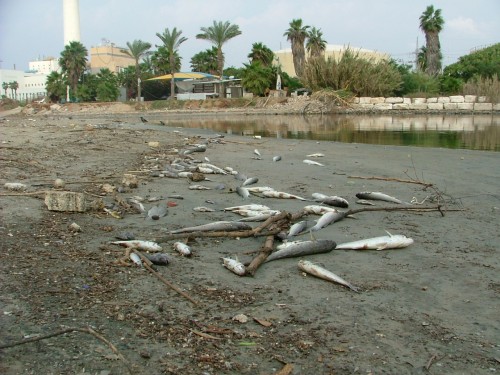
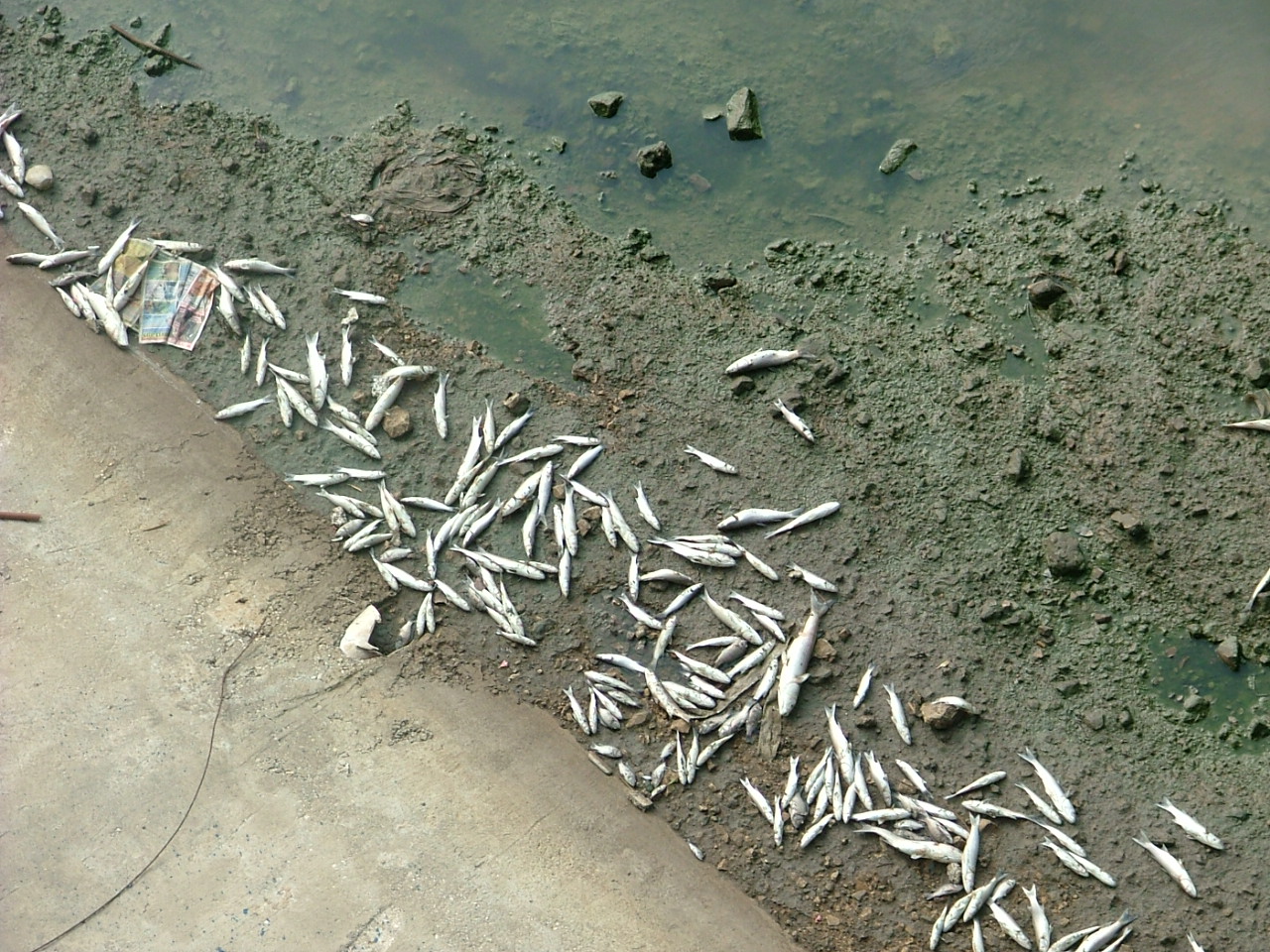
Today Zalul’s Deputy Director, Sagit Rogenstein, took a bike ride from the Zalul office in Ramat Gan along the Ayalon and Yarkon Rivers and photographed the latest side effect of the pollution: Thousands of dead fish.
This sort of pollution has an impact not just on the fish in the river, but also the birds and animals that feed on the fish. It also poses a major public health risk and particularly affects fisherman, beachgoers, and surfers.
Here are some more photographs and video of the aftermath:
[youtube]http://www.youtube.com/watch?v=TIFJ85FN-AY[/youtube]




Exactly..I worked for a water authority back in England. On coming to Israel I took a keen interest in the Yarkon river as it was one of the few rivers that some kind of effort was being made to keep it clean. Unfortunately it’s never been enough. Over the years I’ve seen pollution wipe out the fish stocks..Nobody ever made an effort to re-stock after an incident..The river was left to take care of itself which mean’t that the population consisted mainly of catfish..Soap in the river is seen on many occasions..Makes me wonder who is the culprit…
So why wasn’t the treatment plant capable of handling this soapy situation and what if the next liquid isn’t ‘benign.’ Isn’t anyone doing http://en.wikipedia.org/wiki/Scenario_planning.
“An ounce of prevention is worth a pound of cure.”
“Fight the cause not symptoms.”
The way the authorities are dealing with the problem, now that it no longer looks like a bubble bath, are to pump large quantities of water into the river. this will dilute the contamination, and flush it out to the sea more quickly.
The detergent dissolves fats, sterilizes bacteria, and acts as a surfactant which weakens the surface tension of water.
According to the reports in ynet, the detergents killed all of the bacteria used to treat the sewage at the treatment plant, and untreated sewage mixed with detergent flowed to the river.
http://www.ynet.co.il/articles/0,7340,L-3621942,00.html
A similar, but smaller, event occurred in August, but the investigators cleared Sano as a source
http://www.ynet.co.il/articles/0,7340,L-3578709,00.html
Yes this is awful, but it’s possible that protecting against this spill might not be a reasonable use of our resources. The spill was caused by detergent stock, a relatively non-hazardous material, especially when compared to solvents, oils, fuels, refrigerants, ammonia and industrial waste. According to the news reports I heard, a fire in a nearby furniture store spread to the Sano factory, causing the storage tank to fail, so the failure was due to an accident outside of the Sano factory.
It’s important to note that the spill did not flow to the river, but was contained and ended up draining into the wastewater/sewage system and reaching the treatment plant. Then we had the situation that the treatment plant couldn’t handle the burden, and raw sewage full of detergent flowed into the river. At least we don;t have much to worry about from pathogens/bacteria.
I know that for hazardous materials stored in sensitive areas, there are regulations that require a basin to catch the liquid in case of a breach. In the Sano case, we had a relatively benign liquid in an area that would not flow directly to the river.
So we have to decide how much safeguarding we are willing to do, considering the overall costs. If we require this tank to be protected, then ALL similar ones must be protected as well as all of the more dangerous ones. Then they must all be inspected, approved and monitored, to ensure compliance and continued protection – since we don’t know which tank will rupture.
The financial costs and the regulatory burden will be huge, and we will all end up paying much higher costs for all our products – not just the soaps and cleaning supplies that Sano makes. During this time of financial crisis, can we really afford – and will the public accept – measures like these?
THIS HAS GOT TO STOP..I LIVE IN THE RAMAT GAN SECTION OF THE RIVER CLOSE TO THE SEVEN STATIONS..IN THE LAST TWENTY YEARS I HAVE WITNESSED AT LEAST FIVE MAJOR POLLUTIONS ON THE RIVER RESULTING IN TOTAL FISH KILLS..AS I UNDERSTAND IT, NOBODY HAS BEEN PROSECUTED FOR THESE CRIMES AGAINST THE ENVIRONMENT..IT’S ABOUT TIME THESE COMPANIES WERE MADE TO PAY FOR THE DISASTERS THEY’RE WREAKING ON OUR WILDLIFE..COME ON ISRAEL WAKE UP..
That is just awful. How come there hasn’t been any increase in protecting against chemical and oil spills. It is going to take years before the Yarkon River returns to itself. Can’t we have a rubber ball system in ships to protect against things like this. Kinda of like Kramer’s idea on Seinfeld.
Catastrophic Chemical Spill Hits Israel’s Yarkon River http://tinyurl.com/5pvt7z