Eco-Rabbi: Parshat Korach – Using The Land to Cover Up Our Mistakes

ec-rabbi jewish spiritual side of the environment ecology judaism israel green clean technology green techThis week’s Bible segment describes revolution and miracles. The leadership of Moses and his brother Aaron are questioned and God comes and backs up his choice with various miracles.
But the challenge was no simple disagreement.

Korach’s challenge to Moses was seen as blasphemy. God had set up the camp to be an incubator for his young nation. The people who had caused the uprising were unraveling the seams of the nation that God and Moses had worked so hard to build.

Metaphorically, God took care of the waste in the camp.

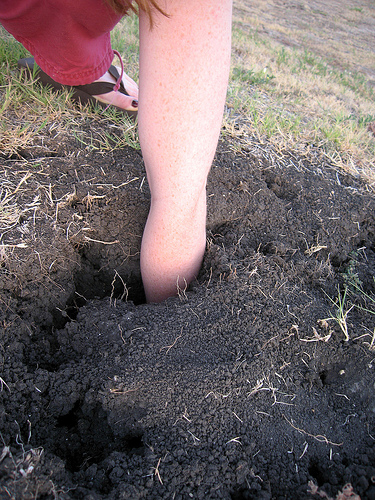
When you have garbage and it starts smelling up the house, you dump it. And that is exactly what God did. The ground swallowed up all of the people of the rebellion cleaning them from his people’s midst.

Man has been dumping his garbage in landfills for millennia. Back in early pre-industrial times waste was mainly composed of ash from fires, wood, bones, bodies and vegetable waste. It was disposed of in the ground where it would act as compost where it would help to improve the soil. When the Industrial Revolution came around materials became more available than labor. When reusing and recycling used to be commonplace, now the same practices of burying our waste has become destructive. Now we use materials freely that do not even break down…

While it was a viable solution for God, it is no longer a viable solution for us. Let us recycle when we can. Those of us who have gardens should consider compost heaps. But most importantly, Israel is now one of the forerunners of clean technology. Technology has brought us to this point. We are now at a place where we can use technology to fix our mistakes. Let us embrace this and clean out our camp.

For more Eco-Rabbi, see:
Stones Across the Path
Eco-Rabbi on Parashat Naso
Eco-Rabbi, Man the Tree of the Field


Jack Reichert
Jack Reicherthttps://www.greenprophet.com/
As far back as he can remember Jack Reichert has been interested in the environment. In the second grade, he rallied all of his classmates to donate one recess a week to cleaning up litter from the schoolyard. That was the same year that a city councilman asked him to help with his campaign because of the letter Jack had written asking him to clean up Boston Harbor. Ever since Jack has followed the development of the international green conscience with anticipation and hope that one day we will treat Mother Earth with the respect she deserves and not turn her into another Giving Tree. For tips, feedback and prophet sightings, Jack can be reached at jack (at) greenprophet (dot) com.

Read More

TRENDING

Self-repairing contact lenses and desalination membranes that fix themselves?

Could the humble contact lens become a sustainability breakthrough? Researchers in Korea have developed a self-healing hydrogel lens that repairs scratches with just one hour of UV light exposure. Beyond reducing waste from disposable contacts, the technology could one day help extend the life of solar panels, water filtration systems, and other plastic-based products.

Collecting kinetic energy from roads; REPS turns traffic into a power plant

REPS announced a $23.6M equity financing round to scale...

From Pilot Plant to Global Stage: How Aduro Clean Technologies’ 2026 Expansion Signals a Turning Point for Chemical Recycling Investors Like Yazan Al Homsi

The company's Next Generation Process (NGP) Pilot Plant in London, Ontario, has officially moved into initial operating campaigns, generating the kind of structured, repeatable data that separates laboratory promise from commercial viability.

Astro uses AI to help procure land for renewable energy

For oil-rich, environmentally vigilant Gulf states, Astro isn’t just another startup story. It is a blueprint for accelerating an energy transition that is now existential, not optional.

Urban miner Sortera raises $45 million USD to pull aluminum from the scrap pile

Sortera Technologies, founded in 2020 by Nalin Kumar and Manuel Garcia, is emerging as a major U.S. circular-industry player. Led by CEO Michael Siemer, the company uses AI and advanced sensors to turn scrap metal into high-value aluminum alloys. Its new ~$45 million funding round signals investor appetite for industrial decarbonisation—where emissions cuts come not from PR-friendly solar installs, but from upgrading the materials that power EVs, solar frames, and construction.

Yerukim Forms a New Green Economy Where the Money is Really Green

The Yerukim members who pick up the recyclables get to keep the monetary reward, the public earns "green" bills that can be used in shops, and business owners get to be associated with environmentalism.

Choosing Riyadh over Dubai? What Investors Should Know

Saudi Arabia is deploying capital at unmatched scale to catalyze tourism and advanced industry while rewiring its power-and-water backbone. The investable frontier is widening—especially in renewables, grid storage, water efficiency/desal retrofits, and hospitality operating platforms. Prudent investors will insist on phased delivery, enforceable KPIs (energy, water, biodiversity), and RHQ/zone compliance—while pricing political-economy and reputational risks alongside growth upside.

Sell your cooking oil for biodiesel money

Want to make money on old french fry oil? Sell it.

Qatar Alternative Energy Summit Pairs Investors And Innovators

Alternative energy investors and innovators can meet n' greet in Doha, Qatar March 16 and 17.

Here’s How To Implement The Four Pillars Of Employee Engagement

If you throw a party for your work team and they are vegans, don't make it a barbecue. Know the sustainability values of your team to boost moral and retain good people.

Locals From Rishon Fight IKEA

Big Box stores are a pretty new concept in Israel, and thank God that not every Israeli city wants them in their backyard. A word from someone who has see the beautiful farmland around her hometown Newmarket, Ontario stripped and converted into vulgar strip malls of big box shops: they have no place in a healthy and sustainable town or city.

The Jewish National Fund Meets An Inconvenient Truth

According to the JNF, it has transformed thousands of acres of barren land into green forests in Israel. They state that each person emits about 23 tons of carbon per year, estimating that each tree planted can absorb one ton of carbon in its lifetime. That's a whole lot of trees you'd need to be planting. Could so many fit in Israel?

How to quiet noise from construction in your office

Streets need to be resurfaced in New York but the humming and grinding noise is unsettling. Noise is environmental pollution. 

Popular Categories