

Thousands of years before green became hot, the Jewish people were observing the Shmitta, or shmita, a sabbatical year.
The Shmitta is documented in the bible as a year where farmers are forbidden to work the land in order to give the land a rest.
The Lord said to Moses on Mount Sinai. (2) Speak to the Israelites and say to them: ‘When you enter the land I am going to give you, the land itself must observe a sabbath to the Lord. (3) For six years sow your fields, and for six years prune your vineyards and gather their crops. (4) But in the seventh year the land is to have a sabbath of rest, a sabbath to the Lord. Do not sow your fields or prune your vineyards.’(Lev. 25: 1-4).
Talk about giving it a rest! In yesterday’s post we spoke about how radically we could cut down our emissions if the world would take upon itself the Jewish Sabbath. Now we would like you to consider the ramifications of taking a whole Sabbatical year.
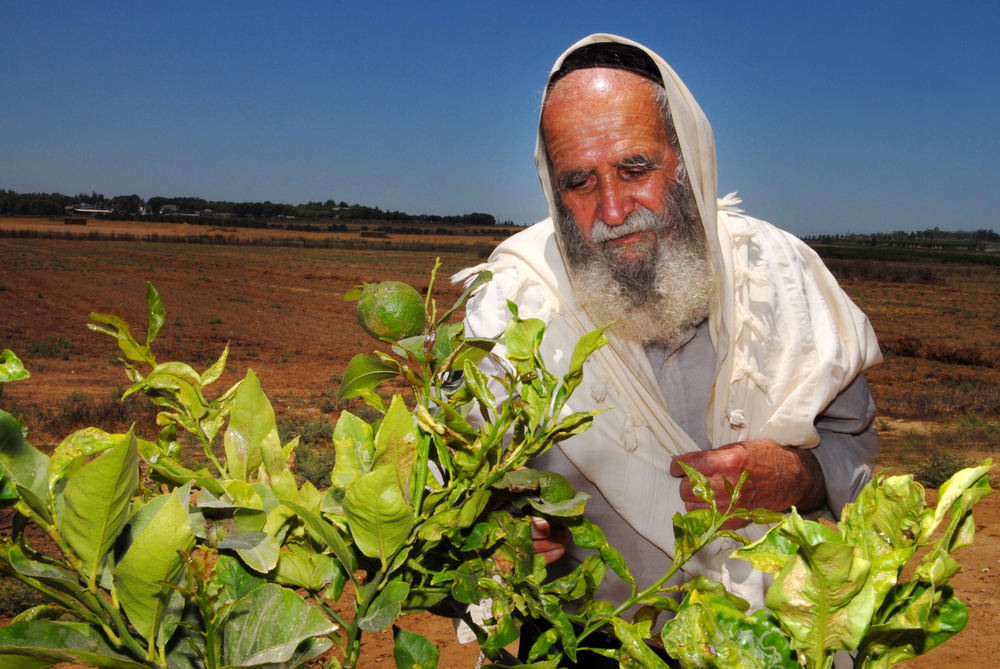
For one out of seven years, religious Zionist farmers give the land a rest. No farming, no pruning, nada! Rabbis later on amended this law so that if there will be damage to your land as a result, you can take minimum care of your land so that you will not lose out in the long term.
It would take some pretty drastic planning ahead, stockpiling grains, pre-freezing fruits and veggies so that during the year off we could eat. But it could be feasible. The whole world could give it a try… The question is would it be good for the land?
Early crop rotation methods were mentioned in Roman literature, and referred to by several civilizations in Asia and Africa. Crop rotation is used in order to fortify the farmed land against depletion of its minerals. This isn’t quite the same, would a Sabbath replenish the land?
Israel’s Ministry of Foreign Affairs discusses this very same question on their website. Samuel Chayen explains that there is a current world-wide debate about sustainability; how to modify our current practices so that we can ensure a future for many years to come.
Chayen shares an anecdote: “Ten years ago, while attending a conference on Microbial Ecology, I listened to a “roundtable” debate dealing with Sustainable Agriculture. One of the speakers mentioned that in some places grazing land is abandoned every few years to let the grass grow and to enhance nitrogen assimilation on the roots of legumes by Rhizobacteria, thus increasing productivity in the following years.
“Given permission to speak, I pointed out that the Jewish law of Shmitta, the Sabbatical Year, provides exactly such orders for the Jewish farmer.”
Above image: ChameleonsEye / Shutterstock.com




I’ve never professed to be a writer nor do I think I want to be one. It was Dan’s intention to have Michele Borntreger with Kaleozone.com write a post but I felt led, as Michele’s husband, to write a post after reading the first few parts of The Naked Gospel.
[…] could only happen in 2008. During the year of Shmitta, which is every seven years, Jewish law dictates that we not work the land of Israel in any way. […]
Such sacrifices occurred when Jews had their holy temple. Today there is no temple, but certain mitzvahs such as shmitta still apply.
Worldwide??
Im sure the Muslims would agree to that one.
.
And I dont see Torah really being followed, even by orthodox Jews. What happened to animal sacrifices, where is the Levitical priesthood and all the other things prescribed in the Torah?