

 Jordan, a country with both an acute energy and water scarcity problem, is on the verge of building its first nuclear power plant, in a barren desert region in the eastern part of the country.
According to a recent article in Ynet News, the plant will be built by Russia’s Rosatom Nuclear Corporation, and follows a ten year nuclear cooperation agreement which was signed by the two countries, with Sergei Kiriyenko of Rosatom representing the Russian side, and Dr.Khalid Toukan representing the Jordanian side.
Dr. Toukan is the Kingdom’s new Atomic Energy Commission chief, and holds a PHD degree in nuclear energy from Massachusetts Institute of Technology (MIT) in the USA. Construction for the plant is due to begin in 2011; and is not expected to be completed until at least 2017.
Some proponents of alternative energy believe nuclear is a clean and green option. Jordan could easily go solar, so let’s explore Jordan’s rationale.
Jordan is a signer of the 1968 nuclear non-proliferation treaty, which now has 189 countries as signatures. Outgoing International Atomic Energy Commission head Mohammad El Baradei visited the Kingdom recently and spoke with both Dr. Toukan and Jordanian Energy Minister Khaled Sharida, who told him that Jordan also plans other types of alternative energy projects, including solar energy and wind energy farms.
Jordan presently imports 95% of its energy needs, which is a big part of the national budget. An atomic energy plant, when in full operation, is expected to supply about 20-25% of the country’s electricity requirements, which are presently supplied by fuel oil powered electric power plants.
There is another reason for Jordan’s increasing interest in nuclear power, due to there being large quantities of uranium ore in parts of Jordan, that can be used as fuel for nuclear power plants as well as being developed into an export commodity that is expected to have a value of at least $500 million per annum, and will bring in much needed capital to the Kingdom.
Local environmentalist are unhappy with the idea, and point out that such a plant will be very harmful to Jordan’s very fragile eco-structure as well as requiring large amounts of water to cool the reactor fuel rods, which Jordan simply doesn’t have. Large scale mining of uranium would also be very damaging to the country’s environment. And what about their big plan to generate energy from the Dead Sea – Red Sea canal? Despite their desire to not work with Israel.
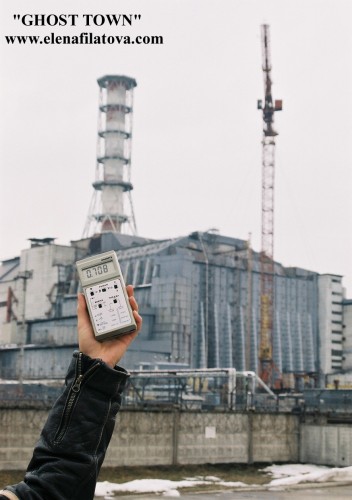
The Russian Atomic energy representative, Mr. Kiriyenko, said that his company plans to build three other atomic energy plants in Jordan following the completion of the first one. While this may seem very positive in regards to dealing with Jordan’s future energy needs, it causes many to reflect back on what is still referred to as the most serious nuclear energy disaster, the Chernobyl disaster, which occurred in the Ukraine in the late 1980’s, and resulted in horrendous damage to property and to the lives of the people living near the site.
The example of Chernobyl, which we’ve covered here recently on Green Prophet, might well be reason enough for a small country like Jordan to think again before undertaking such a project, and put more effort into developing other forms of energy, especially solar energy.



[…] and fully approved by Parliament,” concluded Toukan. Formerly Minister of Energy, Chairman Toukan holds a Ph.D. in Nuclear Engineering from the Massachusetts Institute of […]
[…] southern Turkey at Akkuyu, in Egypt (still under deliberation) in Saudi Arabia and Kuwait, in Jordan , and in Qatar, where the government there recently made an agreement with Russia towards the […]
[…] to building a nuclear power plant on the banks of the Nile River in Egypt; or at the Red Sea port of Aqaba, as Jordan has under consideration, on a major earthquake fault zone is mind-boggling, to say the least. Maybe the outcome of […]
[…] Operating an international airline in a small country like Jordan, where a large portion of the population live in one geographical area (the East Bank of the Jordan River), is challenging, to say to least. Besides the obvious issues of air and noise pollution, there are others such as fuel and other energy consumption, which puts a severe financial strain on a country which has to import virtually all its fuel supplies and is so strapped for domestic power supplies that it is seriously considering building a nuclear power station on the shoreline outside of Aqaba. […]
[…] Jordan Explores the Nuclear Option AKPC_IDS += "18376,";Browse topics: Energy, Israel […]
Jordan Explores The Nuclear Option, Despite Alternative Plans For …: Some proponents of alternative energy bel.. http://bit.ly/4crFDf
Jordan Explores The Nuclear Option, Despite Alternative Plans For … http://bit.ly/165PMB
Jordan Explores The Nuclear Option, Despite Alternative Plans For … http://bit.ly/k00S4
Jordan Explores The Nuclear Option, Despite Alternative Plans For … http://bit.ly/XdCCp
Jordan Explores The Nuclear Option, Despite Alternative Plans For … http://bit.ly/JuxEz
Jordan Explores The Nuclear Option, Despite Alternative Plans For …: Green Living Tips » … Louise Looks At E.. http://bit.ly/XddTt
Maurice,
Your story is full of inaccuracies and factual errors.
First off, Jordan is planning the construction of its first nuclear power plant near Aqaba in the South of the country, not in the ‘barren deserts of the East’, as your article claims. The Jordan Atomic Energy Commission is currently examining areas in the Central-East region for the third and fourth power plants, perhaps you were confused by the recent Jordan Times article http://www.jordantimes.com/?news=18264.
Second, no deal has been made for the construction of the country’s first power plant. The JAEC has yet to select an international consultant for pre-construction feasibility studies, let alone select a firm to aid in preparing the bid for the plant’s construction. To assert that the country has already selected a company to build the country’s first nuclear power plant, an incredible investment of decades in the making, ahead of any preparation, technological survey or competitive bidding process is nothing short of preposterous.
Third, the nuclear cooperation agreement Jordan signed with Russia is a standard agreement paving the way for future collaboration in the field of nuclear energy. Jordan has already signed such agreements with South Korea, China, the UK, Canada, and is expecting to sign similar Memorandums of Understanding with Japan and the US. This does not mean that Jordan has signed a pact with a Russian firm to build a reactor, nor does it mean that Russia has an inside-edge in the bidding process. It is merely a technical formality.
Fourth, the Jordanian government along with the Jordan Atomic Energy Commission are fully-committed to the Red-Dead Canal project, and are pinning the future of the country’s nuclear programme on the initiative’s success. The two are to be woven together, to provide water for nuclear reactors and for the reactors in turn to provide energy for the mega-water project. To imply that the country is dragging its feet because of resistance to cooperating with Israel is absurd.
I wonder why you wrote this piece with such a blatant disregard to facts from officials mouths and on the ground, rooted in rational thought and reason. Perhaps you wanted to go out on a limb to draw the link to Chernobyl, or perhaps to show disdain for Jordan’s nuclear programme (which, by the way, does not mean that the country is abandoning its renewable energy plans). Either way, the piece is wrong from the opening sentence on.
I urge you to fact-check before posting similar articles in the future, particularly since such facts are widely available in English and do not require proficiency in the Arabic language.
Sincerely,
A journalist in Jordan
Jordan Explores The Nuclear Option, Despite Alternative Plans For … http://bit.ly/ezB8o
Jordan Explores The Nuclear Option, Despite Alternative Plans For “Clean” Fuel On The Go http://ow.ly/15HFWM
New blog post: Jordan Explores The Nuclear Option, Despite Alternative Plans For "Clean" Fuel On The Go http://bit.ly/3V1XDi