
Less Government Bureaucracy Would Solve Israel's Water Crisis

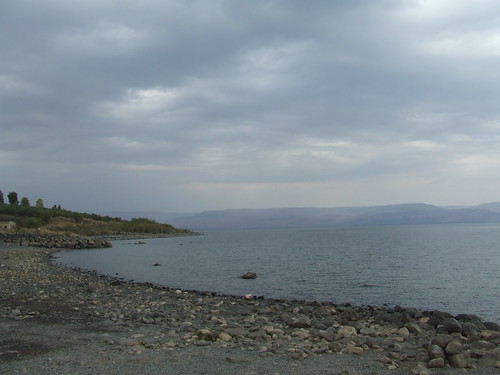
Sea of Galilee photo kinneret
Sea of Galilee

Two interesting articles were published in the past week about Israel’s water shortage and possible solutions. In the first one, “Drops in the Bucket,” which appeared in Haaretz, the article discusses how Israelis can expect water rations and increased fees for water in the near future, like the inhabitants of countries such as Cyprus and Jordan, if the government continues to be slowed down in making decisions by lengthy bureacracy and legislation. 

The CEO of Mekorot, Ido Rosolio has been particularly vocal about preventing this, as Mekorot, which is the national water utility, is a company that should be and is able to handle Israel’s water needs and provide the necessary infrastructure to maintain it in the longterm.

However, the government has thus far failed to pass the necessary legislation to do so. 

Should the legislation ever be passed, according to Rosolio, Mekorot has plans to

“to alter the entire structure of the nationwide delivery system and the map of Israel’s water resources: from a situation in which the primary water sources are Lake Kinneret and the aquifers – depleted in recent years – to a situation where the primary source of drinking water will be desalination plants; from the activity of reservoir pumping to a situation where water is piped from the sea continuously, in accordance with changes in population size and distribution. The entire water system has to be overhauled. This is Mekorot’s primary mission today.” 

The second article, “Water Authority wants public input in master plan,” which appeared in the Jerusalem Post online edition, discusses the water issue from the government angle and that Israel’s Water Authority recently unveiled a new plan to encourages professional as well as public involvement in the master plan for Israel’s future.

While in the past no master water plan has successfully been approved by the government and Israel is currently using an interim plan (extended to 2013), Authority head, Prof. Uri Shani is on a mission to make it finally happen. In synch with Mekorot’s plans, the areas the Water Authority plans to address include: 

“removing obstacles to developing the water economy, preparing for threats, treating sewage, preserving natural water resources, increasing efficiency, protecting nature and increasing the number of professionals in the water economy.”

An additional key to solving Israel’s water crisis would be to get more young professionals in the field. Training and education is essential and univeisties should get involved to help with the recuriting efforts.


Lisa Damast
Lisa Damasthttp://www.israelinnovation20.com/
Lisa Damast is an online marketing consultant by day and blogger of Israel technology by night. Her blog, Israel Innovation 2.0, provides news and analysis of Israeli technology companies in the enterprise software, Web 2.0 and cleantech sectors. Lisa is also a co-organizer of the Jerusalem Business Networking Forum (JBNF). JBNF helps facilitate online and offline networking among business professionals in Jerusalem, including in the cleantech industry. Lisa made aliyah in August 2007 after receiving a degree in Communication Studies from Boston University in May 2007. Lisa can be reached at lisa (at) greenprophet (dot) com.
3 COMMENTS

Comments are closed.

TRENDING

Forever chemicals banned from Europe’s drinking water

The EU is taking a bold step in making sure all European Union member states worked to monitor and reduce PFAS levels in drinking water.

Elon Musk to create Mars base station on the Moon

For those unaware, SpaceX has already shifted focus to building a self-growing city on the Moon, as we can potentially achieve that in less than 10 years, whereas Mars would take 20+ years.

Astro uses AI to help procure land for renewable energy

For oil-rich, environmentally vigilant Gulf states, Astro isn’t just another startup story. It is a blueprint for accelerating an energy transition that is now existential, not optional.

Earth building with Dead Sea salt bricks

Researchers develop a brick made largely from recycled Dead Sea salt—offering a potential alternative to carbon-intensive cement.

Farm To Table Israel Connects People To The Land

Farm To Table Israel is transforming the traditional dining experience into a hands-on journey.

Turning Your Energy Consultancy into an LLC: 4 Legal Steps for Founders in Texas

If you are starting a renewable energy business in Texas, learn how to start an LLC by the books.

Tracking the Impacts of a Hydroelectric Dam Along the Tigris River

For the next two months, I'll be taking a break from my usual Green Prophet posts to report on a transnational environmental issue: the Ilısu Dam currently under construction in Turkey, and the ways it will transform life along the Tigris River.

6 Payment Processors With the Fastest Onboarding for SMBs

Get your SMB up and running fast with these 6 payment processors. Compare the quickest onboarding options to start accepting customer payments without delay.

Qatar’s climate hypocrisy rides the London Underground

Qatar remains a master of doublethink—burning gas by the megaton while selling “sustainability” to a world desperate for clean air. Wake up from your slumber people.

How Quality of Hire Shapes Modern Recruitment

A 2024 survey by Deloitte found that 76% of talent leaders now consider long-term retention and workforce contribution among their most important hiring success metrics—far surpassing time-to-fill or cost-per-hire. As the expectations for new hires deepen, companies must also confront the inherent challenges in redefining and accurately measuring hiring quality.

8 Team-Building Exercises to Start the Week Off 

Team building to change the world! The best renewable energy companies are ones that function.

Thank you, LinkedIn — and what your Jobs on the Rise report means for sustainable careers

While “green jobs” aren’t always labeled as such, many of the fastest-growing roles are directly enabling the energy transition, climate resilience, and lower-carbon systems: Number one on their list is Artificial Intelligence engineers. But what does that mean? Vibe coding Claude? 

Somali pirates steal oil tankers

The pirates often stage their heists out of Somalia, a lawless country, with a weak central government that is grappling with a violent Islamist insurgency. Using speedboats that swarm the targets, the machine-gun-toting pirates take control of merchant ships and then hold the vessels, crew and cargo for ransom.

Related Articles

Popular Categories