Green Tsunami Washes Over Knesset

green environmental legislation Israel Knesset


Maybe it was the teetering government or the water crisis, or maybe it was just the sticky and oppressive summer heat. Whatever the cause, the summer session of the Knesset closed last week with an unprecedented burst of environmental legislation.

Leading the charge was a trio of maverick lawmakers – Dov Hanin, Michael Melchior and Ofir Pines-Paz – who have devoted their time in the Knesset to pushing the environment to the top of the agenda. Green Prophet salutes these guys and their accomplishments.

Here’s a roundup of the laws that we hope will make Israel a cleaner and healthier place to live:

Laws that passed their final readings:

Clean Air Law – After years of marathon discussions, and a few influential demonstrations, a law was finally passed that regulates the emission of pollutants into the air. The law requires the government to reduce air pollution through standards, monitoring, enforcing and even leveling fines and criminal charges against heavy polluters. The law will go into effect only in 2011, but it is a safe bet that industry will begin taking it into account immediately.

Environmental Enforcement Law – Until now, only the central government had the authority to enforce a variety of environmental laws, and it also collected the associated fines from offenders. Under the new law, local authorities will now be authorized to enforce these laws, and the income they receive from the associated fines will serve as an incentive to strongly enforce environmental laws within their jurisdictions.

The Polluter Pays – Assigning an economic value to pollution has a way of getting polluters to think long and hard about cleaning up their act. This law will do just that by adding an element of economic disincentives to all of the environmental laws already on the books.

Laws that passed their preliminary readings, and must still pass a final reading in the Knesset:

Encouragement of Bike Transportation – Drawn up by a group of environmental NGO’s and passed in its first reading by a huge majority of 66-1, this law, when passed, would require the paving of bike paths, parking facilities for bikes, showers at places of work (riding to work can be a sweaty business around these parts), and will give bikers the right to take their bikes with them on train, light rail and bus rides. The law’s sponsors believe it will contribute to reducing air pollution and traffic accidents, save highway space, improve the health of the public and, of course, protect bike riders from crazy Israeli drivers.

Reducing Use of Plastic Bags – In much of the world, disposable plastic bags have already gone out of style. The law would require grocery stores to offer their customers multi-use alternatives.

Water Polluters – Israel faces a serious water shortage in the near future, and this law would tighten enforcement of pollution of water sources.

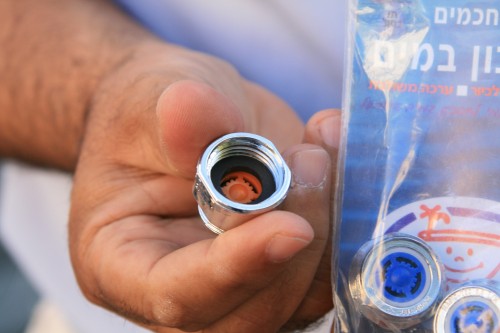
Water and Energy Efficiency in Public Buildings – These two bills would require the installation of water- and energy-saving devices in all of Israel’s public buildings.

In addition, laws are in the works that deal with radiation-emitting cellular antennas, greenhouse emissions, ending government subsidies for polluting factories and cleaning up polluted brownfield sites.

Via:: TreeHugger, NRG

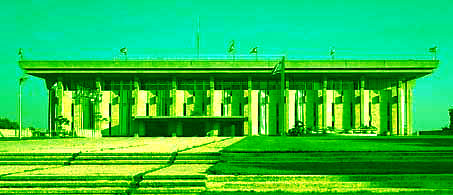
Original Image: Jewish Virtual Library


Jesse Fox
Jesse Fox
Jesse Fox is hoping to complete a graduate degree in urban planning at the Technion sooner rather than later. In the meantime, he is working at green NGO’s,volunteering with African refugees and writing as much as he can to try and get the word out. He is also a regular contributor at TreeHugger.com. Originally from North Carolina, Jesse has lived in Memphis, Boston, Quito and the Arava before finally settling down in Tel Aviv. There he can occasionally be found chilling at the beach. Jesse can be reached at jesse (at) greenprophet (dot) com
1 COMMENT
  1. Amazing News!

    One question: A chunk of these laws effect factory owners and workers. We’re not talking people purposely polluting the world, but workers who have always done their job a certain way, that are now being told that way is illegal (or that illegality will finally be enforced). This is expensive for them! And threatens hundreds if not thousands of jobs.

    Classically, public goods like clean water and clean air have their costs picked up by the government (and our taxes). Is Israel providing some sort of monetary support to factories forced to change? Are their any low-emission incentives?

    I’d hope that our country not only condemn polluters, but also give them a viable, profitable alternative, other than selling factories and sending business to China, where pollution standards will not be enforced.

LEAVE A REPLY

Please enter your comment!
Please enter your name here

TRENDING

Earth building with Dead Sea salt bricks

Researchers develop a brick made largely from recycled Dead Sea salt—offering a potential alternative to carbon-intensive cement.

Farm To Table Israel Connects People To The Land

Farm To Table Israel is transforming the traditional dining experience into a hands-on journey.

Remilk makes cloned milk so cows don’t need to suffer and it’s hormone-free

This week, Israel’s precision-fermentation milk from Remilk is finally appearing on supermarket shelves. Staff members have been posting photos in Hebrew, smiling, tasting, and clearly enjoying the moment — not because it’s science fiction, but because it tastes like the real thing.

An Army of Healers Wins the 2025 IIE Goldberg Prize for Peace in the Middle East

In a region more accustomed to headlines of loss than of listening, the Institute of International Education (IIE) has chosen to honor something quietly radical: healing. The 2025 Victor J. Goldberg Prize for Peace in the Middle East has been awarded to Nitsan Joy Gordon and Jawdat Lajon Kasab, the co-founders of the Army of Healers, for building spaces where Israelis and Palestinians — Jews, Muslims, Christians, Druze, and Bedouins — can grieve, speak, and rebuild trust together.

Peace hospital opens between Jordan and Israel

The proposed medical centre, described by Emek HaMaayanot Regional Council head Itamar Matiash as “a centre for cancer treatment, so that people from Jordan or further away could come and receive treatment,” would become the flagship of a wider cluster of medical, academic and innovation-based services planned for the Israeli half of the zone.

6 Payment Processors With the Fastest Onboarding for SMBs

Get your SMB up and running fast with these 6 payment processors. Compare the quickest onboarding options to start accepting customer payments without delay.

Qatar’s climate hypocrisy rides the London Underground

Qatar remains a master of doublethink—burning gas by the megaton while selling “sustainability” to a world desperate for clean air. Wake up from your slumber people.

How Quality of Hire Shapes Modern Recruitment

A 2024 survey by Deloitte found that 76% of talent leaders now consider long-term retention and workforce contribution among their most important hiring success metrics—far surpassing time-to-fill or cost-per-hire. As the expectations for new hires deepen, companies must also confront the inherent challenges in redefining and accurately measuring hiring quality.

8 Team-Building Exercises to Start the Week Off 

Team building to change the world! The best renewable energy companies are ones that function.

Thank you, LinkedIn — and what your Jobs on the Rise report means for sustainable careers

While “green jobs” aren’t always labeled as such, many of the fastest-growing roles are directly enabling the energy transition, climate resilience, and lower-carbon systems: Number one on their list is Artificial Intelligence engineers. But what does that mean? Vibe coding Claude? 

Somali pirates steal oil tankers

The pirates often stage their heists out of Somalia, a lawless country, with a weak central government that is grappling with a violent Islamist insurgency. Using speedboats that swarm the targets, the machine-gun-toting pirates take control of merchant ships and then hold the vessels, crew and cargo for ransom.

Leopoldo Alejandro Betancourt López Turned Ocean Plastic Into Profitable Sunglasses

Few fashion accessories carry the environmental burden of sunglasses. Most frames are constructed from petroleum-based plastics and acrylic polymers that linger in landfills for centuries, shedding microplastics into soil and waterways long after they've been discarded. Leopoldo Alejandro Betancourt López, president of the Spanish eyewear brand Hawkers, saw this problem differently than most industry executives.

Why Dr. Tony Jacob Sees Texas Business Egos as Warning Signs

Everything's bigger in Texas. Except business egos.  Dr. Tony Jacob figured...

Related Articles

Popular Categories