
 “The crisis is at root one of perception; we no longer see the cosmos as alive, nor do we any longer recognise that we are inseperable from the whole of nature, and from our earth as a living being. But there is hope, for as the crisis deepens, the call of anima mundi intensifies.”
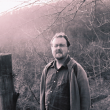
Stephan Harding, ‘Animate Earth‘
Tucked down a leafy lane in the Devon countryside in the UK is an extraordinary educational Centre – Schumacher College, part of the Dartington Hall Trust. Here they offer an Msc in Holistic Science – a ‘hard’ science degree grounded in the ecological philosophy that is the Gaia Principle, or theory.
This principle (in a nutshell) is that the planet is a vast living interconnected system, not the dead, mechanical object that many 19th and 20th Century philosophers and scientists in the West have based their ideas upon.
Stephan Harding is the co-coordinator of that Msc, resident ecologist, teacher on the short course programme that the college runs (and on which I have been fortunate to experience his formal & informal teaching style), and author of this recent book, ‘Animate Earth’, which is the fruit of his teaching and personal experience.
The book is his interpretation and explanation of Gaia and some of its connections and systems. Harding has long been a student and friend of the originator of the Gaia Principle, maverick scientist and writer James Lovelock. It was Lovelock’s friend the Nobel Laurete writer William Golding who coined the term Gaia for Lovelock’s research and findings: into this marriage of science and art, Harding adds his own knowledge of shamanism and ecology, broadening and at the same time deepening the subject.
In his hands, through masterly telling and unusual techniques Gaia opens up into a glorious world of checks and balances, positive and negative feedbacks, and natural processes from algal seeding and carbon fixing through to the concept of systems modelling and daisyworld.
He is a deeply practical man as well as theorist-ecologist: his doctoral research was on Muntjac Deer within a wild wood, and it was here, measuring and recording animal behaviour, that his listening and appreciation of the earth really began. For me as a non-scientist who struggles with the scientific principles, this is a winning read because Harding ranges from the macro to micro, from academic language to a spiritual rythmn, and as a reader I can resonate with the journey he is taking me on, despite some difficulties in my own mind with the subject area.
“Gaia is holding us to account….we are learning the painful way that we are embedded within a larger planetary entity that has personhood, agency and soul….our embeddedness in Gaia is non-negotiable.”
A technique the author uses to encourage a reader to understand further and experience what he is discussing, is to include a series of practical exercises or meditations, scattered through the book, which take the reader on the journey through Gaia. With exercises named ‘sensing the round earth’, ‘swimming through the atmosphere’, ‘breathing chalk & granite’ and ‘riding the clouds’ and half a dozen others, Harding presents the opportunity to know and feel his passion, and join one’s own soul to that of the universe too.
He uses the phrase “to get Gaia’ed” after explaining some examples of people practicing the principles of deep ecology within the world – listening to and intuiting the natural world around us: sensing the spirit of life.
Having been under his tutelage in classrooms and in the woods and wilds of Devon, these personal exercises give a flavour of that group experience – but get out into the Negev Desert or the valleys and wadis of the Galilee, or which ever space is your own personal ‘Gaia space’ as Harding names it, and sense the world, as evoked through Harding’s majestic writing.
Despite bringing both a scientist’s cool eye and a humanitarian passion to how the environment is being desecrated by human neglect, and giving detailed explanations of how the system responds by temperature cooling balance, for example through the ‘complexity-stability debate’; Harding is an optimist, believing in an uprising of ecological wisdom and a movement toward sustainability. Anima Mundi is leading humanity toward understanding our part in its well-being.
This is a vast book, barely contained within its 250 pages, and its tough to try to do it justice within a short review such as this. I know I will return to it again and again, whenever I need to understand the role of biomes and carbon molecules, and also to read and recconnect with our knowledge of the bigger system that is Gaia.
I urge interested readers, environmentalists, activists and dreamers, spiritualists and scientists the world over to pick up Stephan Harding’s ‘Animate Earth’: your journey through life will never be the same again.
‘Animate Earth’ was published 2006 by Green Books UK (www.greenbooks.co.uk)
A quick plug here for Schumacher College UK – great ecological/environmental short courses & the Msc Holistic Science (www.schumachercollege.org.uk)
If you liked (or loathed) this review, and want to get further inspiration for books to pick up, here’s a selection of others from our Green Prophet ‘summer eco-reads’ festival:
Review of ‘The Emerald planet’ by David Beerling
Review of ‘Confessions of an Eco-Sinner’ by Fred Pearce
Review of ‘Wild Fermentation’ by Sandor Katz
Review of ‘God in the Wilderness’ by Rabbi Jamie Korngold
Review of ‘Field Notes from a Catastrophe’ by Elizabeth Kolbert


[…] Animate Earth…this is the seat of renewal. Under our feet, under roads, under massive buildings and bridges, miles and miles of houses, businesses, playgrounds, and landfills, the earthworks carry on their life-generating web. We build over them, they disappear and we forget the source of life. Small farmers know it; migrants who hand harvest know it; backyard gardeners rediscover it, and food banks appreciate it. Yet governments and chambers of commerce exclude earthworks from their ledgers and blueprints and planning. The ground under our feet – no longer felt between our toes – recedes from our awareness. […]