The New Year of the Trees

Karin-Kloosterman-with-tree
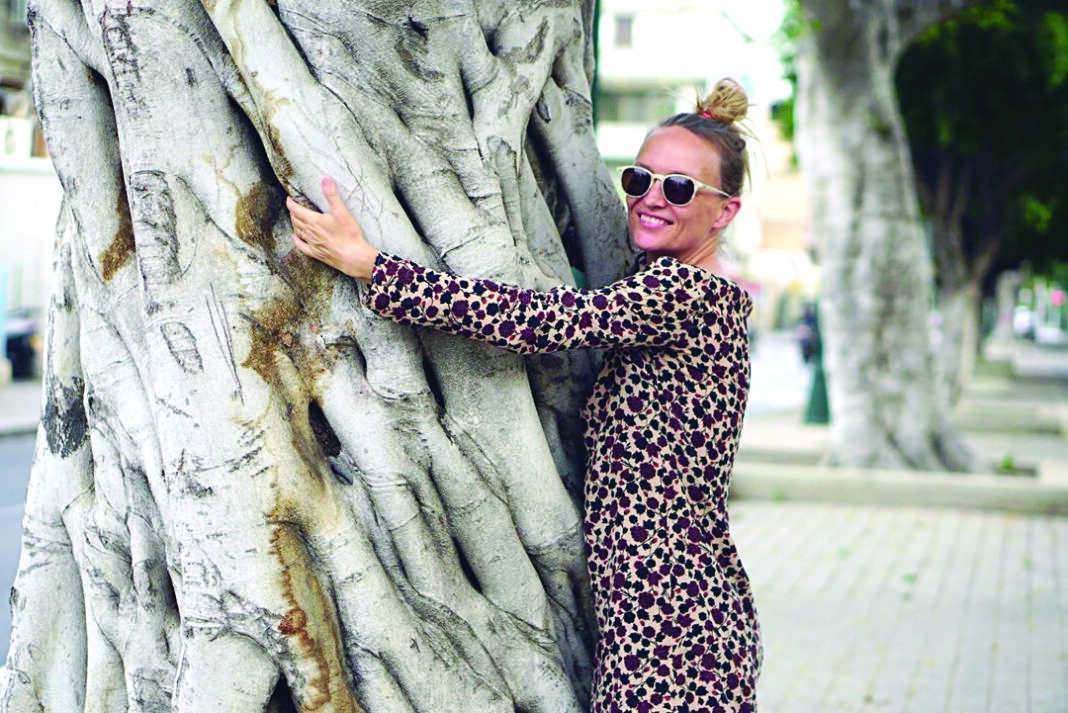
Karin Kloosterman, founder of Green Prophet, really does like to hug trees

Although Israel has grown into a modern post-industrial economy, the country still has strong agrarian roots, most famously, the agricultural socialist community of the kibbutz. But earlier than that, the Bible proscribes things to do to mark the passing seasons. There are rights and rituals for nature in Judaism and it all started thousands of years ago.

So it’s no surprise that the relatively minor Jewish festival of Tu B’shvat, which starts tonight, has been growing in importance. In recent years Tu B’shvat, the New Year of the Trees, has taken on a more ecological significance and represents an opportunity to reflect on one of today’s key environmental questions – the impact of what we eat on our environment. (Read 5 reasons to be grateful for the trees).

Israeli arbor day

For religious Jews the New Year of the Trees is the time when you start counting the age of a tree. All trees share the same birthday. This is important to know when it is acceptable to eat the fruit of a fruit tree, as a Biblical command does not let you eat fruit from a tree grown in the land of Israel that is less than 3 years old. At the age of four year, fruit from four year fruit trees were tithed at the Holy Temple in Jerusalem. Some it went to poor people who didn’t have food.

In the 16th century, the kabbalist Rabbi Yitzchak Luria of Safed and his disciples instituted a Tu BiShvat seder in which the fruits and trees of the Land of Israel were given symbolic meaning. The main idea was that eating ten specific fruits and drinking four cups of wine in a specific order while reciting the appropriate blessings would bring human beings, and the world, closer to spiritual perfection.

In a special essay, Professor Richard Schwartz, author of Judaism and Vegetarianism, reflects on how this festival encourages a more sustainable outlook to our food:

“While other Jewish holidays honor or commemorate events and people, Tu B’Shvat honors trees, fruits, and other aspects of nature,” he explains. “While people generally take the environment for granted, on Tu B’Shvat there is an emphasis on the proper stewardship of the environment.”

One of the special things about the fruit and vegetables in Israel is that they are almost entirely locally-grown. In such a tiny country, it’s rare for anything to travel more than 100 miles from farm to fork (apart from a few foreign commodities like coffee). That’s fantastic compared to my native UK where most food is imported and the proportion of home-grown food is falling each year.

While Israel’s self-sufficiency is an example to other countries – slashing pollution from transport and food storage – ‘food miles’ are not the end of the story. What about how the food is grown and the effects of synthetic fertilisers and pesticides, or the health and welfare of farm animals and workers?

“While there has been increasing interest in Tu B’Shvat recently, this holiday that is so rich in symbolism and important messages for today is still not considered to any great extent by most Jews,” says Schwartz.

“Let us hope that this will soon change and that an increased emphasis on Tu B’Shvat and its important lessons will help revitalize Judaism and help shift our precious, but imperilled, planet to a sustainable path.”

Some activities around this time can be planting trees, fruit trees especially.

Michael Green
Michael Greenhttps://www.greenprophet.com/
Born into a family of auto mechanics and engineers in east London’s urban sprawl, Michael bucked the trend and chose a bicycle instead of a car. A relative newcomer to Jerusalem, he works as a freelance journalist writing for the Jerusalem Post and other publications. Before moving to Israel, he worked for an environmental NGO in England where he developed a healthy obsession with organic vegetables and an aversion to pesticides and GMOs. Michael’s surname is pure coincidence. Michael can be reached at michael (at) greenprophet (dot) com.

Read More

1 COMMENT

TRENDING

Abu Dhabi Put QR Codes on 100,000 Native Trees. Damage One and It Could Cost You $2,700

The Sidr Tree (Ziziphus spina-christi) also known as the jujube tree, may be the most culturally significant of them all. Mentioned in Islamic tradition and valued for its medicinal properties and prized honey, the Sidr has become a symbol of resilience across the Arabian Peninsula.

10 Amazing Facts About the Sidr Tree

Most people in the West have never heard of the Sidr tree. That's strange when you think about it. This tough, thorny desert tree has fed people, bees, birds, and camels for thousands of years. It appears in Islamic tradition. Its honey sells for astonishing prices.

Signs of Shavuot: Grief, Love and Choosing Life

Shavuot is a holiday heavy with symbolism. While it marks the end of the counting of the omer, it also functions as a miniature jubilee. The fiftieth day like a tiny echo of the fifty year cycle. And in each of the seventh years during that cycle, acts of rest and liberation are performed, especially in the fiftieth year.

A Quantum Kaddish? What fungal networks teach us about grief, God and death

Can Zara speak with their recently departed mother through...

Bake a New York Cheesecake for Shavuot

This light, creamy cheesecake fits into your green Shavuot, especially if you make it with organic cheese and eggs. It's also light on sugar.

Locals From Rishon Fight IKEA

Big Box stores are a pretty new concept in Israel, and thank God that not every Israeli city wants them in their backyard. A word from someone who has see the beautiful farmland around her hometown Newmarket, Ontario stripped and converted into vulgar strip malls of big box shops: they have no place in a healthy and sustainable town or city.

The Jewish National Fund Meets An Inconvenient Truth

According to the JNF, it has transformed thousands of acres of barren land into green forests in Israel. They state that each person emits about 23 tons of carbon per year, estimating that each tree planted can absorb one ton of carbon in its lifetime. That's a whole lot of trees you'd need to be planting. Could so many fit in Israel?

How to quiet noise from construction in your office

Streets need to be resurfaced in New York but the humming and grinding noise is unsettling. Noise is environmental pollution. 

EarthX and a blueprint for sustainable investing

Trammell S. Crow, a Dallas-based businessman and father of four, is focusing his efforts on impact investing, and media that focuses on saving the planet through EarthX.

Mining Afghanistan’s Mineral Discoveries Similar to Avatar

Now that American forces in Afghanistan are commemorating the longest period of any war that America has been involved in, including the 1965-73 Vietnam War, the recent discoveries of large and extremely valuable mineral and metal deposits may finally bring to light a reason to continue the presence of US fighting forces in this war torn and backward country.

From Pilot Plant to Global Stage: How Aduro Clean Technologies’ 2026 Expansion Signals a Turning Point for Chemical Recycling Investors Like Yazan Al Homsi

The company's Next Generation Process (NGP) Pilot Plant in London, Ontario, has officially moved into initial operating campaigns, generating the kind of structured, repeatable data that separates laboratory promise from commercial viability.

Nobul’s Regan McGee on Shareholder Value: “Complacency Is the Silent Killer” 

Why the governance framework designed to protect shareholders so...

Should You Invest in the Private Market?

startustartup Unlike public stock exchanges, which offer daily trading, strict...

Popular Categories