The New Year of the Trees

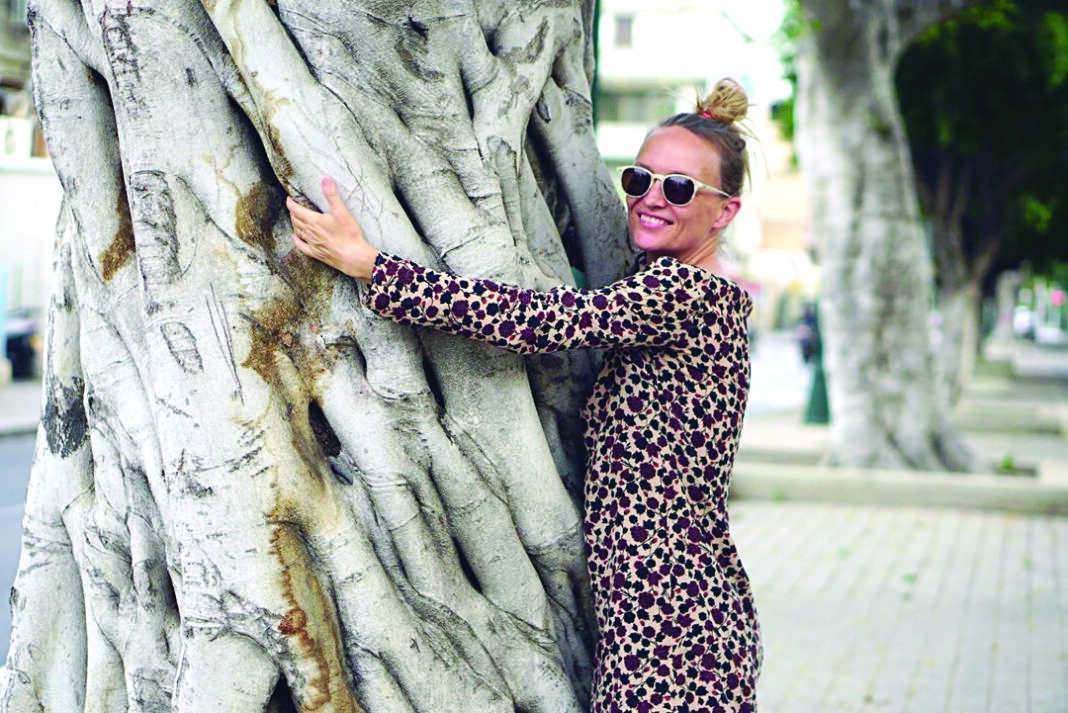
Karin-Kloosterman-with-tree
Karin Kloosterman, founder of Green Prophet, really does like to hug trees

Although Israel has grown into a modern post-industrial economy, the country still has strong agrarian roots, most famously, the agricultural socialist community of the kibbutz. But earlier than that, the Bible proscribes things to do to mark the passing seasons. There are rights and rituals for nature in Judaism and it all started thousands of years ago.

So it’s no surprise that the relatively minor Jewish festival of Tu B’shvat, which starts tonight, has been growing in importance. In recent years Tu B’shvat, the New Year of the Trees, has taken on a more ecological significance and represents an opportunity to reflect on one of today’s key environmental questions – the impact of what we eat on our environment. (Read 5 reasons to be grateful for the trees).

Israeli arbor day

For religious Jews the New Year of the Trees is the time when you start counting the age of a tree. All trees share the same birthday. This is important to know when it is acceptable to eat the fruit of a fruit tree, as a Biblical command does not let you eat fruit from a tree grown in the land of Israel that is less than 3 years old. At the age of four year, fruit from four year fruit trees were tithed at the Holy Temple in Jerusalem. Some it went to poor people who didn’t have food.

In the 16th century, the kabbalist Rabbi Yitzchak Luria of Safed and his disciples instituted a Tu BiShvat seder in which the fruits and trees of the Land of Israel were given symbolic meaning. The main idea was that eating ten specific fruits and drinking four cups of wine in a specific order while reciting the appropriate blessings would bring human beings, and the world, closer to spiritual perfection.

In a special essay, Professor Richard Schwartz, author of Judaism and Vegetarianism, reflects on how this festival encourages a more sustainable outlook to our food:

“While other Jewish holidays honor or commemorate events and people, Tu B’Shvat honors trees, fruits, and other aspects of nature,” he explains. “While people generally take the environment for granted, on Tu B’Shvat there is an emphasis on the proper stewardship of the environment.”

One of the special things about the fruit and vegetables in Israel is that they are almost entirely locally-grown. In such a tiny country, it’s rare for anything to travel more than 100 miles from farm to fork (apart from a few foreign commodities like coffee). That’s fantastic compared to my native UK where most food is imported and the proportion of home-grown food is falling each year.

While Israel’s self-sufficiency is an example to other countries – slashing pollution from transport and food storage – ‘food miles’ are not the end of the story. What about how the food is grown and the effects of synthetic fertilisers and pesticides, or the health and welfare of farm animals and workers?

“While there has been increasing interest in Tu B’Shvat recently, this holiday that is so rich in symbolism and important messages for today is still not considered to any great extent by most Jews,” says Schwartz.

“Let us hope that this will soon change and that an increased emphasis on Tu B’Shvat and its important lessons will help revitalize Judaism and help shift our precious, but imperilled, planet to a sustainable path.”

Some activities around this time can be planting trees, fruit trees especially.

Michael Green
Michael Greenhttps://www.greenprophet.com/
Born into a family of auto mechanics and engineers in east London’s urban sprawl, Michael bucked the trend and chose a bicycle instead of a car. A relative newcomer to Jerusalem, he works as a freelance journalist writing for the Jerusalem Post and other publications. Before moving to Israel, he worked for an environmental NGO in England where he developed a healthy obsession with organic vegetables and an aversion to pesticides and GMOs. Michael’s surname is pure coincidence. Michael can be reached at michael (at) greenprophet (dot) com.
1 COMMENT

LEAVE A REPLY

Please enter your comment!
Please enter your name here

TRENDING

Plant trees in cities, for your heart

It seems like a no-brainer, but sometimes you need to give evidence to city councillors: A new multi-institutional study led by UC Davis Health suggests that not all green space is created equal. Living in urban neighborhoods with more visible trees is associated with a 4% lower incidence of cardiovascular disease, while areas dominated by grass or low shrubs may be linked to higher cardiovascular risk.

Funeral for a Tree plays birdsong from tree rings of beloved oak

When a 65-year-old oak tree in Steve Parker’s yard died from fungal disease, he did not cut it into firewood or haul it away. He did not erase it. He cut the tree into disks and then turned them into records that play birdsong –– a touching tribute to the years that the tree was house and home to birds and all manners of creatures. 

What is the Jewish Climate Trust?

Jewish Climate Trust has quickly attracted the attention and support of some of the most influential voices in Jewish philanthropy, drawing backing from prominent family foundations and business leaders connected to the Bronfman and Schusterman philanthropic networks, alongside climate-focused investors and community builders aligned with founding leader Nigel Savage. Together, these donors have committed many millions of dollars to build a serious, long-term climate platform for the Jewish world — not as a symbolic gesture, but as a strategic intervention in one of the defining challenges of this generation.

Dubai developer uproots ancient Italian olive trees, $270,000 USD each for “eco” project

Flying centuries-old trees across continents via specialized cargo burns enormous fossil fuels. Replanting them in a desert climate—no matter how advanced the irrigation or “heritage preservation techniques”—places immense stress on organisms that evolved for Mediterranean seasons, soils, and rainfall patterns. And we've seen that the UAE is not capable of taking care of trees so survival rates are uncertain.

The benefits of a real Christmas tree

Every year, Americans purchase 25–30 million Real Christmas Trees (according to the National Christmas Tree Association), directly supporting rural economies and preserving open green space, around 350,000 acres of it. Buying real means investing in American agriculture instead of overseas manufacturing.

Qatar’s climate hypocrisy rides the London Underground

Qatar remains a master of doublethink—burning gas by the megaton while selling “sustainability” to a world desperate for clean air. Wake up from your slumber people.

How Quality of Hire Shapes Modern Recruitment

A 2024 survey by Deloitte found that 76% of talent leaders now consider long-term retention and workforce contribution among their most important hiring success metrics—far surpassing time-to-fill or cost-per-hire. As the expectations for new hires deepen, companies must also confront the inherent challenges in redefining and accurately measuring hiring quality.

8 Team-Building Exercises to Start the Week Off 

Team building to change the world! The best renewable energy companies are ones that function.

Thank you, LinkedIn — and what your Jobs on the Rise report means for sustainable careers

While “green jobs” aren’t always labeled as such, many of the fastest-growing roles are directly enabling the energy transition, climate resilience, and lower-carbon systems: Number one on their list is Artificial Intelligence engineers. But what does that mean? Vibe coding Claude? 

Somali pirates steal oil tankers

The pirates often stage their heists out of Somalia, a lawless country, with a weak central government that is grappling with a violent Islamist insurgency. Using speedboats that swarm the targets, the machine-gun-toting pirates take control of merchant ships and then hold the vessels, crew and cargo for ransom.

Leopoldo Alejandro Betancourt López Turned Ocean Plastic Into Profitable Sunglasses

Few fashion accessories carry the environmental burden of sunglasses. Most frames are constructed from petroleum-based plastics and acrylic polymers that linger in landfills for centuries, shedding microplastics into soil and waterways long after they've been discarded. Leopoldo Alejandro Betancourt López, president of the Spanish eyewear brand Hawkers, saw this problem differently than most industry executives.

Why Dr. Tony Jacob Sees Texas Business Egos as Warning Signs

Everything's bigger in Texas. Except business egos.  Dr. Tony Jacob figured...

Israel and America Sign Renewable Energy Cooperation Deal

Other announcements made at the conference include the Timna Renewable Energy Park, which will be a center for R&D, and the AORA Solar Thermal Module at Kibbutz Samar, the world's first commercial hybrid solar gas-turbine power plant that is already nearing completion. Solel Solar Systems announced it was beginning construction of a 50 MW solar field in Lebrija, Spain, and Brightsource Energy made a pre-conference announcement that it had inked the world's largest solar deal to date with Southern California Edison (SCE).

Related Articles

Popular Categories